





-9%
Prices may change without prior notice. Please confirm product availability and current pricing via WhatsApp or call before placing your order.Dismiss
₨ 339,000.00 Original price was: ₨ 339,000.00.₨ 309,000.00Current price is: ₨ 309,000.00.
Payment Methods:

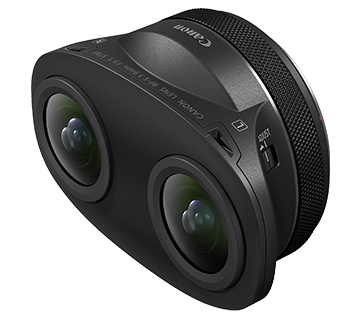
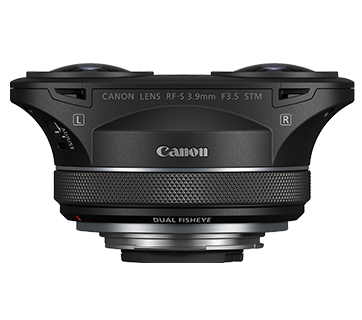
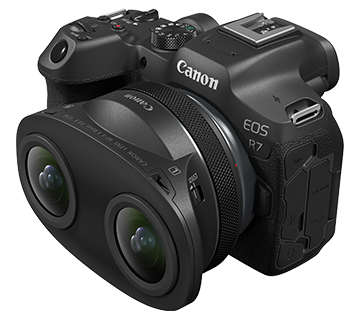
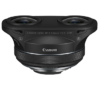
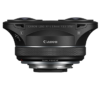
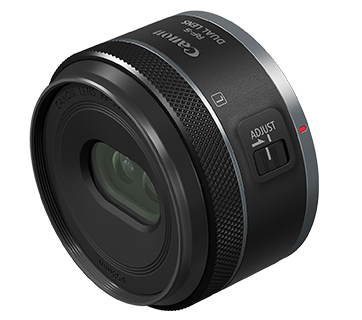
Create immersive stereoscopic VR content with the Canon RF-S3.9mm F3.5 STM Dual Fisheye, a specialized APS-C lens designed to simplify virtual reality production with one compatible EOS R-series camera. Its paired fisheye optics capture 144° 3D stereoscopic imagery using the parallax between the left and right lenses while both optical paths project onto a single image sensor.
With dual-lens STM autofocus, a bright F3.5 aperture, synchronized optical movement, adjustable focus differential and a rear filter system, the RF-S3.9mm is built around a streamlined EOS VR workflow rather than conventional single-lens photography.
The RF-S3.9mm uses two fisheye lenses positioned side by side to create the parallax needed for stereoscopic imagery. Each lens observes the scene from a slightly different viewpoint, reproducing the visual difference between the left and right eyes.
Instead of requiring two separate cameras, the RF-S3.9mm directs the optical information from both lenses onto one image sensor. Canon’s EOS VR workflow can then convert the captured circular fisheye imagery into an equirectangular format suitable for immersive VR production.
The lens itself has a specified 144° angle of view. That optical specification should not be confused with the broader immersive viewing format used by VR software and head-mounted displays. The RF-S3.9mm is designed as part of Canon’s EOS VR stereoscopic workflow.
Traditional stereoscopic production can require two cameras, careful physical alignment, synchronized recording, matching exposure and color settings, and additional stitching work. The RF-S3.9mm is designed to consolidate the optical capture stage into a single compatible camera system.
The left and right fisheye lenses simultaneously capture different viewpoints of the same scene.
Both optical paths are recorded through the camera’s single image sensor, reducing the need for two-camera synchronization.
EOS VR software converts the circular fisheye imagery into the equirectangular format required for immersive VR production.
The processed VR footage can be prepared for viewing on compatible head-mounted displays and other supported immersive platforms.
One of the defining features of the RF-S3.9mm is its dual-lens STM autofocus mechanism. The left and right lenses are designed to move together so the two optical paths can maintain the focus relationship required for stereoscopic recording.
A dedicated microprocessor helps optimize actuator control in conjunction with the camera’s autofocus algorithm. The result is a lens system designed specifically around synchronized dual-lens focusing rather than conventional single-optical-path autofocus.
Stereoscopic capture depends on maintaining an appropriate relationship between the left and right images. The RF-S3.9mm therefore includes an adjustable focus differential function.
The system allows the right lens to be driven independently when required, providing an additional adjustment point for situations where the focus relationship between the two optical paths needs refinement.
Dual-lens VR optics are not simply two ordinary lenses placed side by side. Their focus relationship directly affects the stereoscopic result. The adjustable differential gives the operator additional control over that relationship.
The RF-S3.9mm provides a maximum aperture of F3.5, giving the lens a useful amount of light-gathering capability for immersive content production across indoor, controlled and available-light environments.
Canon also uses a dual-lens electromagnetic diaphragm (EMD) system. Coordinated aperture control is important in stereoscopic production because the left and right optical paths need to maintain consistent exposure characteristics.
The RF-S3.9mm uses a compact 8-group, 11-element optical construction developed specifically for its dual-fisheye VR application.
Canon’s Air Sphere Coating (ASC) is incorporated to help suppress flare and ghosting caused by unwanted internal reflections. This is particularly relevant when shooting immersive scenes containing bright light sources or high-contrast illumination.
The optical construction is designed specifically around the compact dual-fisheye configuration.
ASC helps reduce unwanted flare and ghosting to support cleaner image rendering in challenging lighting.
The specified diagonal, horizontal and vertical angle of view is 144°00′.
Minimum focusing distance is 0.2m / 0.66ft.
Because of the extremely wide dual-fisheye optical design, the RF-S3.9mm uses a rear filter system rather than a conventional front-mounted filter arrangement.
The rear filter holder accepts compatible gelatin filters and supports 30.5mm screw-on filters. This makes it possible to integrate ND filtration into the lens setup when exposure control is required for bright environments or specific production conditions.
The RF-S3.9mm is designed to work as part of Canon’s EOS VR ecosystem. Instead of treating the lens as a conventional fisheye lens, the production workflow takes the paired circular images and processes them into an immersive format.
Record the scene using the RF-S3.9mm mounted on a compatible EOS R-series camera.
EOS VR Utility converts the circular fisheye source into an equirectangular projection.
Supported tools provide options for left/right image swapping, straightening and parallax correction.
The processed material can be prepared for supported VR, editing and spatial-video workflows.
Canon’s EOS VR Utility provides the software stage that turns the RF-S3.9mm’s dual-fisheye capture into usable immersive footage. Depending on the supported workflow and software version, the utility provides tools for conversion, viewing, correction and export.
Canon’s current EOS VR Utility development also supports newer spatial and immersive workflows, including supported exports for spatial viewing platforms. Software capabilities can vary by operating system, camera, lens and application version, so the current Canon software documentation should be checked before a production workflow is finalized.
For editors working inside Adobe Premiere Pro, Canon’s EOS VR workflow can be extended through the EOS VR Plugin. This allows supported operations to be incorporated into a familiar professional post-production environment.
Software note: Canon’s software capabilities and licensing requirements can change over time. Verify the current EOS VR Utility and EOS VR Plugin requirements before starting a commercial production workflow.
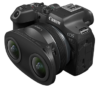
The RF-S3.9mm is an APS-C RF-mount VR lens and is designed for use with compatible Canon EOS R-series cameras. Canon has specifically expanded compatibility to designated cameras as firmware and camera support have developed.
The EOS R7 is a key camera for the RF-S3.9mm workflow. Canon also announced compatibility with the EOS R50 V from June 2025. Camera compatibility and required firmware should always be confirmed against Canon’s latest support documentation before purchase or a professional shoot.
| Camera / System | RF-S3.9mm Workflow | Important Note |
|---|---|---|
| Canon EOS R7 | Supported | Use the required/current Canon firmware for RF-S3.9mm support. |
| Canon EOS R50 V | Supported | Compatibility announced by Canon from June 2025. |
| Other RF-S compatible cameras | Check Canon documentation | Do not assume compatibility simply because the camera has an RF mount. |
This is not a conventional ultra-wide lens for ordinary photography. Its primary purpose is stereoscopic VR capture using Canon’s EOS VR production workflow.
An RF mount alone does not guarantee that every EOS R-series camera can use every RF-S3.9mm feature. Confirm the camera model and firmware before ordering.
The lens is only one part of the production workflow. EOS VR software is required for converting and preparing the dual-fisheye footage.
Decide where the finished content will be viewed before production. VR headsets, spatial-video platforms and conventional screens can have different delivery requirements.
The specifications below summarize the official Canon technical information for the RF-S3.9mm F3.5 STM Dual Fisheye lens.
| Lens Type | Dual Fisheye / 3D VR lens |
|---|---|
| Lens Mount | Canon RF-S / RF mount system |
| Focal Length | 3.9mm |
| Maximum Aperture | F3.5 |
| Minimum Aperture | F16 |
| Angle of View | 144°00′ diagonal / horizontal / vertical |
| Lens Construction | 8 groups, 11 elements |
| Diaphragm Blades | 7 |
| Maximum Magnification | 0.03× |
| Drive System | Gear-type STM |
|---|---|
| Autofocus | Dual-lens STM autofocus |
| Focus Control | Synchronized left/right lens movement |
| Focus Differential | Adjustable; right lens can be independently driven |
| Closest Focusing Distance | 0.2m / 0.66ft |
| Filter System | Rear filter holder |
|---|---|
| Screw-On Filter | 30.5mm |
| Gelatin Filter | Supported through rear holder |
| Coating | Air Sphere Coating (ASC) |
| Anti-Dust / Moisture Resistance | Not supported |
| Lens Hood | Not supported |
| Dimensions | 112.0 × 83.7 × 54.6mm |
|---|---|
| Weight | Approx. 290g without rear filter holder |
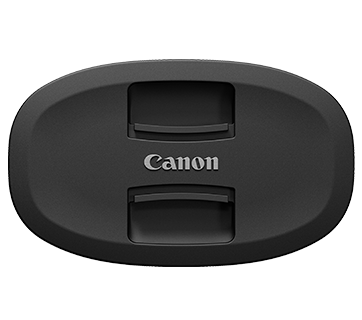
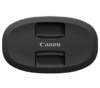
| Lens Cap | Canon Lens Cap 3.9, center pinch |
| Dust Cap | Lens Dust Cap RF |
| Lens Bag | LS1014, sold separately |
The RF-S3.9mm belongs to a wider Canon RF-S lens ecosystem. If your work includes conventional APS-C photography and video alongside VR production, these related lenses cover a broader range of focal lengths and applications.
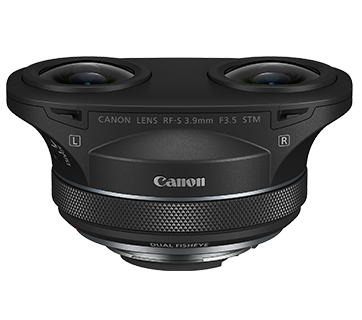
A related dual-lens VR solution for Canon’s APS-C RF system, designed for a different immersive capture application.
A conventional ultra-wide APS-C zoom for landscape, architecture, travel and video applications.
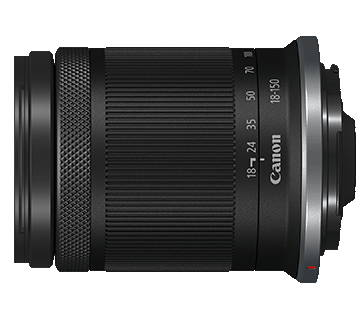
A versatile all-purpose APS-C zoom covering wide-angle through telephoto perspectives.
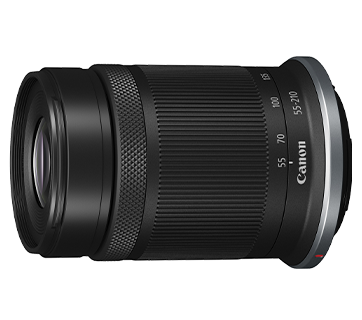
A compact APS-C telephoto zoom for distant subjects, portraits, sports and travel.
Canon’s dual-fisheye lineup includes different optical approaches for stereoscopic and immersive content. The following table highlights the principal published specifications relevant to choosing between the two systems.
| Feature | RF-S3.9mm F3.5 STM | RF-S7.8mm F4 STM |
|---|---|---|
| Optical Type | Dual Fisheye | Dual Fisheye |
| Focal Length | 3.9mm | 7.8mm |
| Maximum Aperture | F3.5 | F4 |
| Primary Concept | EOS VR stereoscopic capture | Dual-lens immersive capture |
| Focus System | Dual-lens STM autofocus | STM-based dual optical system |
| RF-S System | Yes | Yes |
Specifications and compatibility can vary by camera body, firmware and software generation. Confirm the current Canon documentation for the exact production combination you intend to use.
The RF-S3.9mm is best understood as one component of a complete immersive production system. The camera, lens, firmware, storage, filters, software and viewing platform all contribute to the final result.
Start with a Canon camera officially compatible with the RF-S3.9mm and ensure the required firmware is installed.
Use the lens as the stereoscopic capture system, keeping both optical paths properly focused and configured.
Consider compatible rear ND filtration when working under bright conditions and when your exposure workflow requires it.
Process the dual-fisheye source, correct the imagery and prepare the output for your intended viewing or editing platform.
If you are searching for the Canon RF-S3.9mm F3.5 STM Dual Fisheye price in Pakistan, remember that this is a specialized EOS VR lens rather than a mainstream photographic lens. Availability can therefore be more limited and pricing may vary between authorized channels, specialist camera dealers and imported stock.
Make sure the listing is specifically for the RF-S3.9mm F3.5 STM Dual Fisheye and not another Canon dual-fisheye or RF-S lens.
Confirm that your Canon camera is officially supported and has the appropriate firmware for the lens and EOS VR workflow.
For a specialized lens, verify whether the supplied unit carries official/local warranty coverage or dealer warranty.
Check the exact package contents, rear filter holder, caps and any separately sold accessories before completing the purchase.
It is a specialized dual-fisheye lens designed for stereoscopic virtual reality capture with compatible Canon EOS R-series cameras. It captures left and right viewpoints through a single camera sensor for Canon’s EOS VR workflow.
The RF-S3.9mm has a specified diagonal, horizontal and vertical angle of view of 144°00′.
No. The lens uses two fisheye optical paths while the captured light from both lenses is recorded through one compatible image sensor.
Yes. It uses a dual-lens STM autofocus mechanism designed to coordinate the movement of the left and right lenses.
The maximum aperture is F3.5.
The lens uses a rear filter holder that supports 30.5mm screw-on filters as well as compatible gelatin filters.
The closest focusing distance is approximately 0.2m / 0.66ft.
The lens weighs approximately 290g without the rear filter holder.
Canon’s published specification does not list anti-dust or moisture-resistant construction for this lens.
Yes. The EOS R7 is a designated compatible camera for the RF-S3.9mm EOS VR workflow. The required/current camera firmware should be checked with Canon before use.
Canon announced RF-S3.9mm compatibility with the EOS R50 V from June 2025. Always confirm the latest firmware and software requirements before production.
For the intended EOS VR production workflow, yes. Canon’s EOS VR Utility and supported EOS VR software tools are used to convert and process the dual-fisheye imagery into formats suitable for immersive viewing and editing.
The Canon RF-S3.9mm F3.5 STM Dual Fisheye is not designed to compete with conventional ultra-wide lenses. Its purpose is much more specific: stereoscopic VR capture through a streamlined single-camera workflow.
Its 144° angle of view, dual fisheye configuration, synchronized STM autofocus, adjustable focus differential, F3.5 aperture, dual-lens electromagnetic diaphragm and rear filter system make it a purpose-built tool for immersive production.
For creators building VR experiences around a compatible Canon EOS R-series camera, the RF-S3.9mm can significantly simplify the capture side of the production process by combining two viewpoints into one camera-based system.
Looking for the right Canon camera or lens for your next photography, video or immersive production project? Explore Camzon’s Canon collection and related guides.
Product specifications, compatibility information and EOS VR workflow details should be verified against Canon’s latest official documentation.
Canon RF-S3.9mm F3.5 STM Dual Fisheye — Official Product Page
In stock
In stock
In stock
In stock
In stock
In stock
No account yet?
Create an Account